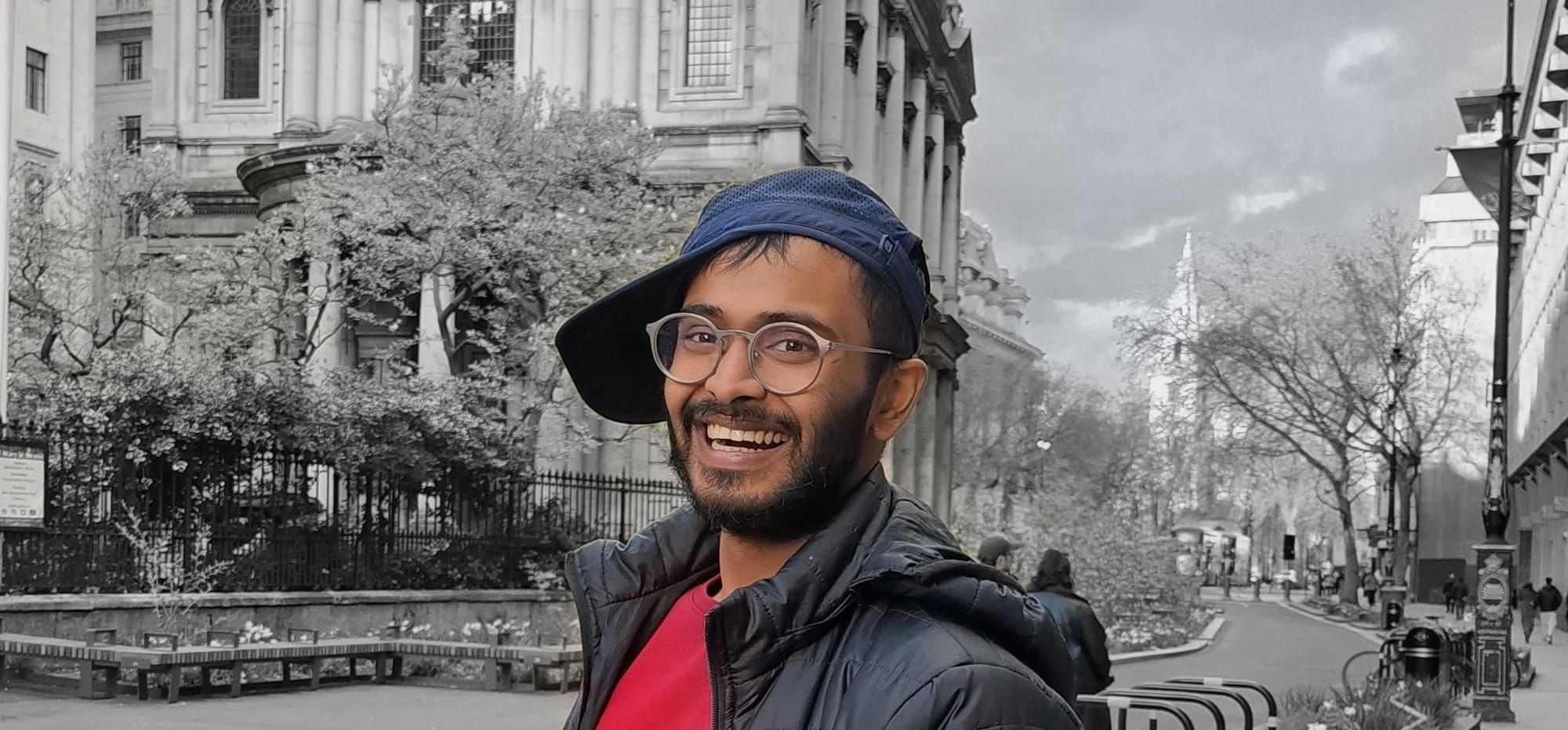
Hey, I'm Kautilya Reddy. Some call me Kauti, others call me Kaito. I answer to both and to neither. I'm a software developer at Viskefi Studios, based in Hyderabad, India. On paper, I'm a robotics master's graduate from King's College London and a bachelor's grad in AI & Robotics from the University of Bedfordshire. Paper is just a support structure—once the print is done, it gets torn off.
Paper never built anything that moved.
I build things. That's the short version.
The long version starts with a kid who learned to spot structural weaknesses before he had the vocabulary for it. I grew up in the Indian cram-school machine: six years of 12-hour days, six days a week, physics-chemistry-math on a loop. The system was designed to produce identical parts, and I was a material it couldn’t melt down. I'm a visual, hands-on learner—show me a mechanism, let me break it and rebuild it, and I'll understand it to the bone. Force-feed me theory, and I'll stare out the window reverse-engineering the hinge on the door.
Before that machine got its hooks in, I was an extrovert who swam, played cricket, competed in equestrian, and was deep into guitar. Art and movement were my native language. In the south of India, where parents launch their kids toward engineer-doctor-lawyer like clockwork, I realized at 12 that wanting to be an artist was treated as a design flaw.
Then came the languages. My dad's career in defence meant a nomadic childhood, a new dialect every year. By 14, I'd reverse-engineered a pattern: every tonal language has a syllable-sequence logic, a hidden structure that carries the same meaning across different skins. I called it the LED bulb effect—a sudden flash where invisible architecture becomes obvious. I’d stumbled onto a linguistics textbook truth just by listening. That habit—hearing the structure beneath the noise—turned into a survival tool for everything that followed.
Those six years of cram school came with one escape: Sundays on the family laptop, catching up on Naruto and Bleach. Anime wasn’t just entertainment—it was a masterclass in storytelling, composition, and character arcs that actually made sense. Around the same time, I found another teacher in pirated video games. A now-closed store sold me discs with hand-written install instructions; one was Visual Boy Advance and Pokémon Emerald. I had no internet. Beating that game took years and rewired my brain for problem-solving in the dark. Then came a cracked GTA San Andreas that taught me about DLL files. I was in middle school, debugging dependency errors before I knew the term “software engineering.” Some kids collected trading cards; I collected undocumented workarounds.
When the six-year cycle ended, I walked away with exam-shaped PTSD. The blueprint in my head said I should pursue arts. I was shoved into Mechanical Engineering—a department that, in that particular institution, was a closed system with near-zero useful output. My roommate was in computer science; I spent more time in his classes than my own. I could compile a kernel in my dorm, but I couldn’t fabricate a chassis. I coped by solving software problems to escape Fluid Dynamics. I still don’t understand why I’m expected to solve a flow problem with equations when I can see the turbulence in my head.
By then, I was freehanding orthographic and isometric assembly drawings before anyone formally introduced me to CAD. When I finally sat down with parametric modeling, it felt less like learning and more like being handed a quad bike after years of sprinting on foot—I’d already built the engine in my mind; the software just gave me handlebars.
My heart was set on software. I’d been comfortable with Linux before university, and the institutional IT was a rusted-out machine running on prayer. At some point, I started cheating in internal exams purely for the sport of it, fully aware the system couldn’t teach me what I needed even if I begged. A trip to Singapore in my second year—after losing the first year to dengue, and a recovery that took nearly eight years to fully stabilize—confirmed the hypothesis: no institute in India could provide the build environment I required.
I started a rebellion at home. It took six months to convince an orthodox family—career government employees, people who’d spent their lives in a rewardless loop—to let me transfer abroad. I wrote my SATs. The US visa was rejected. The officer probably thought I was another scripted applicant. I came home, dejected, and quit the mechanical engineering course. The university suspended me instead of letting me walk away, which I still find funny. The director later validated my hypothesis off the record.
I went back to sports. The pool became my cold reboot. I’d sink underwater and do dolphin kicks, letting the silence wash out years of noise. Without professional coaching—just muscle memory and spite—I got selected for the Inter-University Swim Meet. Third year was a thermal runaway: balancing digital art (from which I was quietly pulled), software, faking mechanical engineering, band rehearsals, and training for the National Swim Meet. I burned out in plain sight. The institution I was paying acted as a perfect insulator—zero heat dissipation.
I survived the rest of that degree as a ghost process. I picked up smoking and drinking as temporary patches. Placement season was a sorting algorithm with a bug: CS and Electronics got hired, Mech went to the null heap. Out of roughly 75 mechanical engineering students, exactly one went on to practice as a mechanical engineer. The rest of us became distributed systems—bankers, consultants, software engineers (hello), insurance agents, master’s refugees. We were a generation of deprecated models.
I never regretted pulling the plug. With the US port closed, the UK became the obvious redirect. I had 15 days to complete admission and visa processing. My family argued I should finish the degree with six months left; I refused. I’d learned to treat their decisions as faulty sensors—always expect the worst reading and calibrate accordingly.
This time, the visa came through. The University of Bedfordshire: objectively one of the worst-rated universities in the UK, subjectively the best decision of my life. Culture shock, weather shock—I was freezing while everyone else acted like it was spring. Pre-pandemic, I was lucky enough to land in the exact conditions that reignite a stalled build. For the first time, I was learning fundamentals from the ground up, hands-on. I also learned to cook from scratch—another form of iterative prototyping. I cut off almost everyone from the old life, though the system still threw occasional error logs: waking up convinced I was back in that Hyderabad dorm. The fix was simple: work harder, recover every lost cycle.
My first 3D printer in Luton was a universe-cracking event. I fell hard for the hardware side—spaghetti failures, supports that shouldn’t have held, parts that taught me more by collapsing than they ever did by printing clean. I developed material intuition: I could look at a PLA print and know exactly where it would fracture, when it would delaminate, and how to redesign around the failure. I carried that instinct into TPU, ABS, PETG. That confidence was earned layer by failed layer.
Then the pandemic hit, and I found my actual people. Friendships formed that made earlier connections feel like cardboard mockups. With Fusion 360 and a printer, the only real ceiling became imagination and modeling skill. I had mechanical and software relatively locked in, but electronics was the missing link—the subsystem the old PTSD still flagged as hazardous. I started with an Arduino Uno R3. A Nerf turret. An automatic curtain opener. I was building things to my tolerances, not adjusting to mass-produced junk from a warehouse. That flipped a switch about global supply chains: AliExpress became my new Amazon, shipping sensor modules years before they hit UK shelves at triple markup. I was suddenly running my own micro-factory from a dorm room.
I was still blitzing the coursework. I worked part-time as a Student Ambassador, handing out flyers and absorbing the quiet mechanics of marketing. I picked up small-bore shooting, explored the countryside, and lived. Luton had its bugs—search it up—but it delivered everything I’d been starved of.
By graduation, I’d outgrown the program. So I designed my own capstone: a Sim-to-Real system in Isaac Sim. The electronics side finally lit up: ROS, CAN buses, Raspberry Pi 4, Nvidia Xavier. I realized ROS was just messaging for robots—nothing mystical. C, Python, and Google’s Mediapipe let me control a robotic arm with a single camera. No motion-capture rig, no million-dollar lab. That project was the proof of concept that let me step into the skin of the engineers I’d grown up idolizing: the protagonist of 3 Idiots, Iron Man, Sherlock Holmes. Not any one of them, but a custom fusion—the good sides and the rough edges running on the same board.
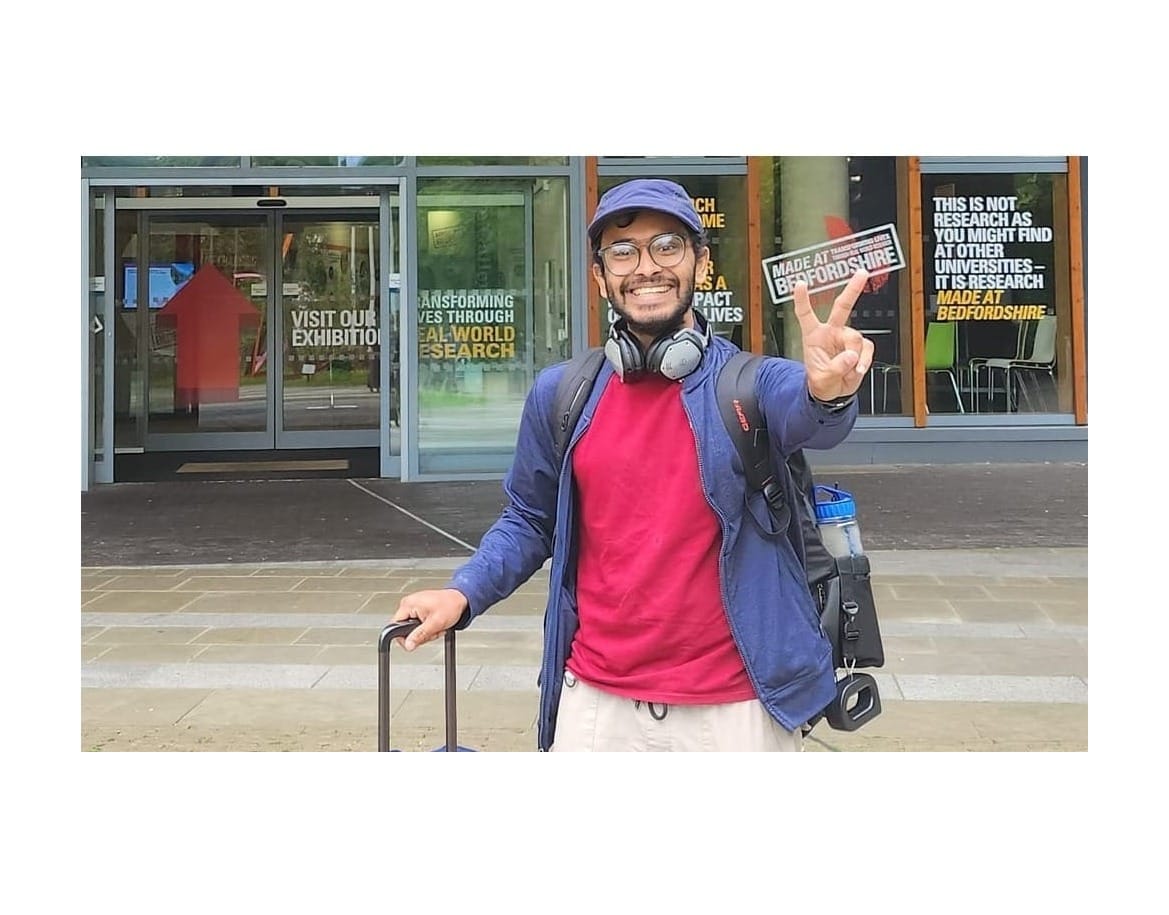
During those undergrad years, I was interning at Viskefi Studios, learning the part of software engineering no lecture hall covers. That experience was a permanent performance upgrade.
My supervisor offered me a research position under a PhD student. I never got to finish it. My family called me back to India, insisting on a US master’s. I fought. They held financial control like a proprietary spec sheet—no interoperability, no negotiation. They officially knew nothing about my architecture.
I couldn’t stand the US for a single week. British firmware was too deeply flashed; American life felt like an incompatible OS. The course was the most theoretical thing I’d ever endured—the “best on the planet,” and I was still competing with a search engine, now an LLM. The exam PTSD resurfaced. I reverse-engineered their grading system, realized I could pass with a blank answer sheet, and scored the lowest on purpose—a quiet experiment to see how the machine processed Indian international students. The classroom was a containerized environment with no cultural mounting points: locals a minority, night classes, more Hindi and Telugu than American English. It felt like being prepped for a holocaust while running on idle.
A job had lost its meaning. The American Dream was a deprecated library. The Indian IT industry looked like an illusion waiting for the first real LLM breakthrough to bring the whole stack down. The H1-B trap was just a promise of money for your nervous system. I’d seen it coming and planned a fallback: I’d applied to UK universities and been accepted at King’s College London. But my family struck again with the slowest decision-making algorithm in the species. The entirety of 2023 became a null pointer.
During that lost year, the trigger event happened. I was helping a friend in Isaac Sim when Cursor and GitHub Copilot autocompleted my entire codebase—three years of heart-work reduced to a Tab completion. The friend had no idea what he was looking at. I knew I had to protect my magnum opus. Cloud costs were unsustainable, so I started homelabbing. CasaOS on a Raspbian instance. My first Gitea server—a private vault for my exposed love letter to my past self. Then ZimaOS on an old Intel NUC, ZeroTier as an invisible LAN. My own on-dev cloud. On the marketplace, I found Ghost. I started posting snippets—tips and tricks for robotics peers running on outdated job experience or starting fresh. I integrated mailing, sign-ins, memberships. Data privacy became non-negotiable. I disappeared from all social media, especially the fake job portal called LinkedIn.
And so Kauti's Trix was born.
Trix is my play on tricks—and a deliberate troll aimed at the fake professionals. The credential-waving, theory-only crowd who’ve never had to debug a real failure. The hierarchies that worship experience over talent while bolting the door on people they never gave a chance to. The job market that treats certificates as proof of craft.
My builds are messy, rough around the edges, and they just work. No performative polish. Prototyping with questionable confidence means starting a project I have no formal business finishing, trusting my gut over the spec sheet, and shipping it anyway.
By the time I reached London for KCL, I was mostly killing time—a high-spec machine left idling. I couldn’t graduate before 2025, and I knew the UK had already exported most of its robotics and manufacturing. I told my family I’d deliver the degree, but there’d be no job waiting. My effort became stoic: I had to pretend I knew nothing, even though my individual project took under 15 hours and was production-grade. A T-Rex in a pig pen.
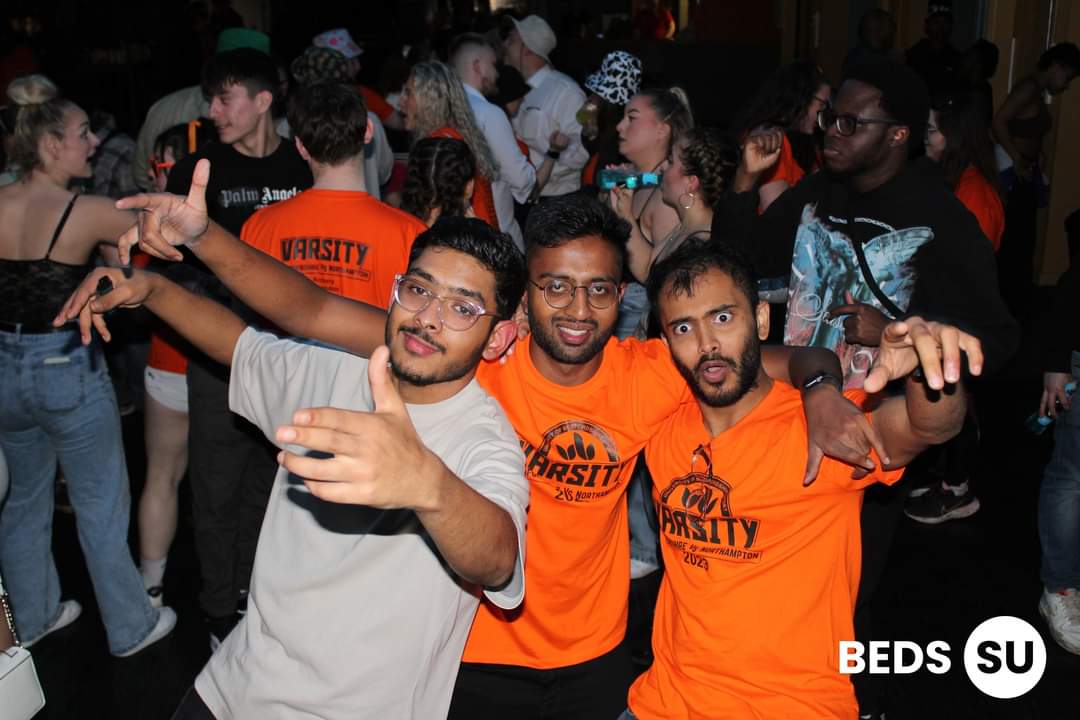
I gave in to the arts and culture of London: pubs, monuments, bridges, photographs, reunions, getting my physical health back online. A seven-year-old reconnection from before middle school resurfaced—one of the few threads that still had signal. She convinced me to return to LinkedIn on one condition: don’t get toxic. I use it as a newsletter platform now, nothing more.
But I was getting emotionally unstable. I wanted to be like Tony Stark, and I got the anxiety attacks instead—same ambition, unexpected runtime errors. Robotics became an obligation where no one could help—not peers, not friends, not family, and not “her.” She was an aspiring designer, rough around the edges, with some of the best instincts I’d seen. One snap on my side cost me her, permanently. She blocked me; I respected the boundary. Who was I to play hero when I couldn’t help the one person who’d been the centre of my universe for that magical year?
The only one I'm competing with is my previous build.
I had a casual talk with the Vice-Chancellor about the design flaws I saw. His apology was more painful than the breakup.
I came back to India after that soul-crushing London loop. By then, I’d developed a strange calibration: I could genuinely predict outcomes with close to 60% accuracy. I felt like Sherlock Holmes, but the predictions never had happy endings—they were practical, utilitarian, the kind that keep the machine running but don’t warm it up.
There was a brief blip of hope when someone offered me a job—with sponsorship—based on a model I’d built for him. It lasted 11 days. The total pay was close to what I’d once earned per hour in the US. Responsibilities piled on, the sponsored visa never arrived before expiry, and my work was quietly handed to a freelancer. It cost me a shot at living job-free for two years. I don’t hold a dramatic grudge, but that employer is permanently blacklisted from my services.
Through all of this, I stayed on good terms with Viskefi. My boss had called out that London employer’s flaws long before I experienced them. He was happy to have me back. Now I’m building projects the VFX sector hasn’t really seen yet—tiny, fast software kits that feel like someone finally optimized for reality instead of slide decks. Small, but production-grade, no dependencies on hype.
Back home, the orthodox family loops tried to reboot: compliance demands, cultural pressure, the usual. My system rejects that by default now. I’ve lived a full enough life to know what I’ll carry forward and what I’ll leave at the curb. I’m a sore thumb sticking out, and I’m done apologizing for it.
A hierarchy that can't teach me a single new instruction doesn't get root access.
What I’m Building Now
This blog is the current project.
The design is deliberate: stripped-back, no decorative overhangs, every element placed with intention. It’s a continuously evolving prototype—just like the person writing it. The real action lives in the posts. Every entry is a build log: raw, step-by-step, sometimes failing catastrophically, sometimes shipping clean. This page is the schematic. The feed is the factory floor.
If you want to see the messy, unpolished process of making things that actually work, hit subscribe and walk the line with me.
The Bike
I’m saving for my first bike: a Royal Enfield Flying Flea C6. If you know, you know. It’s a lightweight, rugged machine from a different era—originally designed to be dropped into war zones and ride out. That’s the energy I’m chasing: unconventional, self-sufficient, impossible to ground.
This bike is my first major purchase made entirely with my own output—no family handout, no bank loan, no corporate leash. A machine bought with the torque of my own hands and the support of people who believe in the build.
Why the Paywall
All posts will soon move behind a paywall. This isn’t a cash grab—it’s a sustainability model.
I’m funding my independence, my tools, and yes, that Flying Flea, through honest work shared with people who understand the value of a well-documented prototype. If my build logs, questionable decisions, and occasional victories mean something to you, your support keeps this one-person rebellion in motion.
Who This Blog Is For
This blog is a love letter to my younger self—the fearless kid wrecking chaos in the name of science, compute, and engineering. The one who broke things first and read the manual only if smoke appeared.
It’s written somewhere in the overlap between Tony Stark’s improvisation, RDJ’s Sherlock Holmes running mental simulations in the background, and Rancho from 3 Idiots quietly calling the system’s bluff. Not because I’m any of them, but because I grew up wishing someone like that actually wrote down what they were thinking while they built.
Around here, perfection is suspicious and “questionable confidence” is a valid engineering methodology. I share the builds, shortcuts, hacks, and hard lessons from homelabs, robotics rigs, VFX pipelines, and automation experiments that probably shouldn’t work as well as they do.
This blog is for:
- The engineer who learned more from a cracked game than a classroom.
- The maker who’d rather print a part than order it.
- The person who knows the system is broken and wants to fabricate a way out.
- The kids stuck in adult bodies.
- The talented people told they’re “not enough” because their CV doesn’t sparkle.
If that sounds like you, welcome home.
Subscribe. Let’s prototype with questionable confidence together.